
Iran Says FIFA Must Be Its World Cup Host Amid US Travel Tension

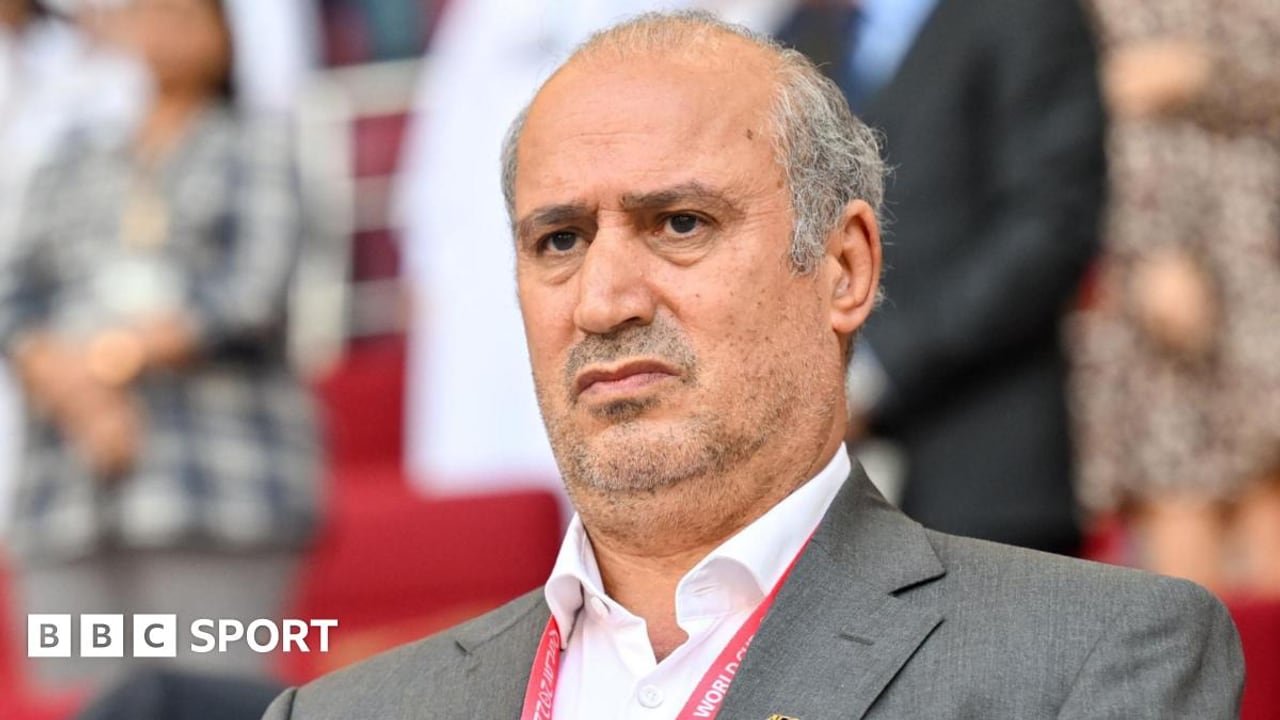
Iran's football chief Mehdi Taj has pushed the country's World Cup 2026 participation issue into sharper focus by saying Iran's host is FIFA, not the United States government. The remark comes while questions remain over how Iran's delegation will be treated when the team travels for matches in the United States.
Iran are scheduled to play all three group matches in the United States. That makes the operational question unavoidable because the team, staff, officials, and support delegation need travel arrangements that work in practice, not just on a tournament document. Political tension has now become part of the football logistics.
The latest dispute follows last week's FIFA Congress in Vancouver. Taj was part of an Iranian federation delegation that turned back from the Canadian border after what they considered disrespectful treatment by immigration officials. Canada's immigration minister later confirmed to parliament that Taj's visa had been cancelled while he was in the air because of links to the IRGC.
The IRGC is a powerful military, political, and economic force in Iran, and it is listed as a terrorist organisation in both Canada and the United States. That legal status makes the travel issue highly sensitive. FIFA can organise the tournament, but national immigration rules still affect who can enter a host country and under what conditions.
FIFA secretary general Mattias Grafstrom has expressed regret over the inconvenience and disappointment caused by the Vancouver episode and invited Iran's federation to Zurich for a meeting about World Cup participation. That invitation matters because it gives both sides a formal setting to discuss the practical steps needed before the tournament.
Taj's wording is important because it frames the issue as respect for a qualified national team. Iran do not want their World Cup presence treated as a favour granted by a political host. They want FIFA to guarantee that the team can participate under tournament conditions that protect the delegation's dignity and ability to compete.
For Group G, the uncertainty is not abstract. Iran's players need training plans, travel timing, media routines, and match preparation settled before the squad enters camp. If delegation access remains unclear, staff planning becomes harder and the team risks arriving with administrative stress around a competition that already carries football pressure.
The case also tests FIFA's role in a three-country World Cup. The organisation can mediate with national associations and hosts, but it cannot erase the legal systems of Canada or the United States. That makes Zurich the place where football operations and government realities have to be translated into a workable plan.
Supporters should separate the confirmed football facts from the unresolved travel questions. Iran remain a qualified team with fixtures in the United States. What is yet to be confirmed is how the full delegation access will be handled and whether additional assurances are needed before arrival.
The strongest outcome would be a clear operational agreement before final squad movement begins. That would let Iran focus on football and let FIFA avoid a late participation dispute. Until then, this remains one of the most important off-field files in the World Cup countdown.
The player side should not be overlooked. Squad members need clarity on visas, family access, staff support, and daily movement before they can treat the event like a normal tournament. If those questions linger, preparation meetings can become dominated by travel administration instead of opponents, fitness, and tactical detail.
The situation also matters for the wider credibility of a shared North American World Cup. Qualified teams must be able to compete without feeling that off-field restrictions are deciding competitive conditions. That is the standard FIFA now has to protect while working inside host-country law.
Read Also: Duckens Nazon Haiti story shows how Iran's conflict has also touched players preparing for the World Cup.
Related Articles
All News
FIFA Amnesty Clears Otamendi And Caicedo For World Cup Openers
FIFA has waived one-game World Cup bans for Nicolas Otamendi and Moises Caicedo, clearing both players for their opening matches.
Read Article
U.S. Soccer Opens New National Training Center Before World Cup 2026
U.S. Soccer has officially opened the Arthur M. Blank National Training Center in Georgia, giving the federation a permanent home before hosting World Cup 2026.
Read Article
Mexico Ends School Year Early For World Cup 2026 And Heat Concerns
Mexico has moved the school-year finish to June 5, citing World Cup hosting and an extraordinary heat wave forecast before the tournament begins.
Read Article